


If you’re shopping for a home loan, the pre-qualification step is where most buyers either gain a strategic edge or unknowingly give one up. The wrong service can ding your credit, lock you into a single lender’s rate shelf, or hand your contact information to a lead-generation network that has no intention of actually originating your loan.
The right service tells you what you can borrow, at what rate, and does it without triggering a hard inquiry on your credit report. This list evaluates six mortgage pre-qualification services based on four criteria: credit impact (soft pull vs. hard pull), lender access (one shelf vs. multiple wholesale channels), transparency on rate mechanics, and speed to a usable pre-qual letter.
A quick note on methodology: Shop Mortgage Rates is the service behind this article, and it ranks first. That said, the goal here is genuine comparison — the broker model and the retail model serve different borrowers in different ways, and you deserve a straight read on both.
By Duane Buziak, NMLS #1110647 | Coast2Coast Mortgage LLC, NMLS #376205
How Pre-Qualification Services Actually Differ
Most buyers assume pre-qualification is pre-qualification — that the process is roughly the same regardless of where you start. It isn’t. The three categories of service in this market operate on fundamentally different mechanics.
Broker rate-shopping platforms access multiple wholesale lenders simultaneously. You submit your scenario once and receive competing offers from lenders who price against each other for your business. The borrower benefits from that competition without applying individually to each lender.
Retail direct lenders originate from their own rate shelf. You get one offer — that lender’s current pricing on your scenario. It may be competitive; it may not. There’s no structural mechanism forcing the rate down.
National aggregators collect your data and sell it as a lead. No origination relationship exists. The lenders who receive your information paid for the lead, not your loan. These are not featured in this article.
Understanding which model you’re working with changes how you interpret any rate you’re quoted. Now, here’s the breakdown.
1. Shop Mortgage Rates
Best for: Borrowers who want competing wholesale rate offers with zero credit score impact
Shop Mortgage Rates is a wholesale mortgage broker platform that runs a Vantage Score 4.0 soft pull — no hard credit inquiry — and shops your scenario across 500+ wholesale lenders simultaneously. Free to use. Licensed in Virginia, Florida, Tennessee, and Georgia.

Where This Tool Shines
The structural advantage here is lender access. When a single broker submits your file to hundreds of wholesale lenders at once, those lenders are effectively bidding on your loan. That competitive dynamic is absent when you apply directly to a retail lender, where the loan officer’s only product shelf is their own employer’s rate sheet.
The NoTouch Credit Pull is the other meaningful differentiator. Using Vantage Score 4.0 — a scoring model appropriate for pre-qualification screening — the platform initiates your pre-qual without triggering a hard inquiry. According to the CFPB, pre-qualification inquiries that use soft pulls do not affect your credit score. That matters if you’re still in the comparison phase and not ready to formally commit to an application. This is what a genuine no hard inquiry mortgage pre approval process looks like in practice.
Key Features
NoTouch Credit Pull: Vantage Score 4.0 soft pull initiates pre-qualification with zero impact to your credit score.
500+ Wholesale Lender Access: Your scenario is shopped across a deep lender network — you receive competing rate offers, not a single-shelf price from one institution.
Free to Borrowers: The broker fee is paid by the wholesale lender at closing, not by you out of pocket.
Cash-Out Refinances to 90% LTV: Meaningful for homeowners who need to access equity — most retail lenders cap cash-out at 80% LTV on conventional loans.
24/7 Availability and Fast Close Times: Pre-qualification is available around the clock, and the platform promotes some of the fastest close timelines in the market.
Realtor Referral Program: Real estate professionals can refer clients directly, with a structured referral relationship built into the platform.
Best For
Borrowers in Virginia, Florida, Tennessee, or Georgia who are in the active rate-shopping phase and want to see what multiple wholesale lenders will offer before committing to an application. Also well-suited for homeowners exploring cash-out refinance options above the standard 80% LTV ceiling, and for real estate agents who want to offer clients a no-credit-impact pre-qualification pathway.
Pricing
Free to borrowers. The broker receives compensation from the wholesale lender at closing — this is standard broker compensation structure under federal Regulation Z. No origination fee is charged directly to the borrower.
The Rate Difference in Real Dollars
Before reviewing the retail options, it’s worth grounding the broker-vs-retail comparison in actual math. These are illustrative figures — not guaranteed rates — but the arithmetic is real.
Scenario: $350,000 purchase loan, 30-year fixed, 80% LTV, 740 FICO score.
Scenario A (broker-shopped wholesale rate): 6.625% note rate, $0 origination points. Monthly P&I: approximately $2,242.
Scenario B (retail single-shelf rate): 6.875% note rate, $0 origination points. Monthly P&I: approximately $2,299.
Monthly difference: ~$57. Annual difference: ~$684. 5-year cumulative difference: ~$3,420.
A 0.25% rate difference on a $350,000 loan costs roughly $3,400 over five years — before any refinancing. That gap can widen or narrow depending on your specific scenario, but it illustrates why lender access matters at the pre-qualification stage. The Fannie Mae LLPA Matrix shows exactly how credit score and LTV combinations affect pricing — a borrower at 699 FICO vs. 700 FICO can face a materially different price adjustment grid, which is another reason pre-qualifying with accurate score data matters before you formally apply.
2. Rocket Mortgage
Best for: Buyers who want a fully digital, brand-recognized pre-qualification letter quickly
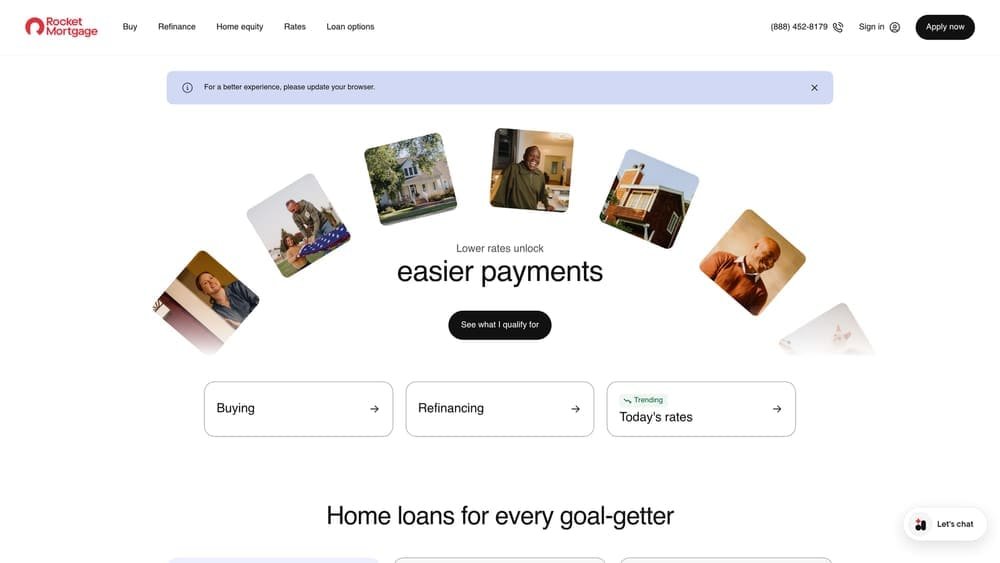
Rocket Mortgage is a large retail direct lender offering a fully digital pre-qualification and pre-approval experience, including a “Verified Approval” option for buyers who want a stronger letter backed by income and asset verification.
Where This Tool Shines
Rocket’s primary advantage is brand recognition. Sellers and listing agents across the country are familiar with their pre-approval letters, which can reduce friction in competitive offer situations. The fully digital application process is genuinely fast, and the mobile app experience is among the more polished in the retail segment.
The Verified Approval option is worth noting: it goes beyond a standard pre-qual by verifying income and assets upfront, giving buyers a stronger position in negotiations. That’s a meaningful product distinction from a basic pre-qualification letter.
Key Features
Fully Digital Application Flow: The entire pre-qualification and application process runs through their website or mobile app without requiring paper documents at the start.
Verified Approval: An enhanced pre-approval option that includes income and asset verification, producing a more credible letter for competitive purchase situations.
Brand Recognition: Sellers and real estate agents nationally are familiar with Rocket’s letters, which can smooth the offer acceptance process.
Mobile-First Experience: The app-driven process is designed for buyers managing their home search on a phone.
Best For
Buyers who prioritize a fast, digital experience and want a nationally recognized pre-approval letter for competitive offer situations. Less suited for borrowers who want to compare rates across multiple lenders, since Rocket prices from its own rate shelf only.
Pricing
Origination fees vary by loan type and scenario. Check Rocket’s current rate sheet directly on their site for accurate pricing on your specific loan profile.
3. Guild Mortgage
Best for: Buyers who need down payment assistance programs or specialty loan products
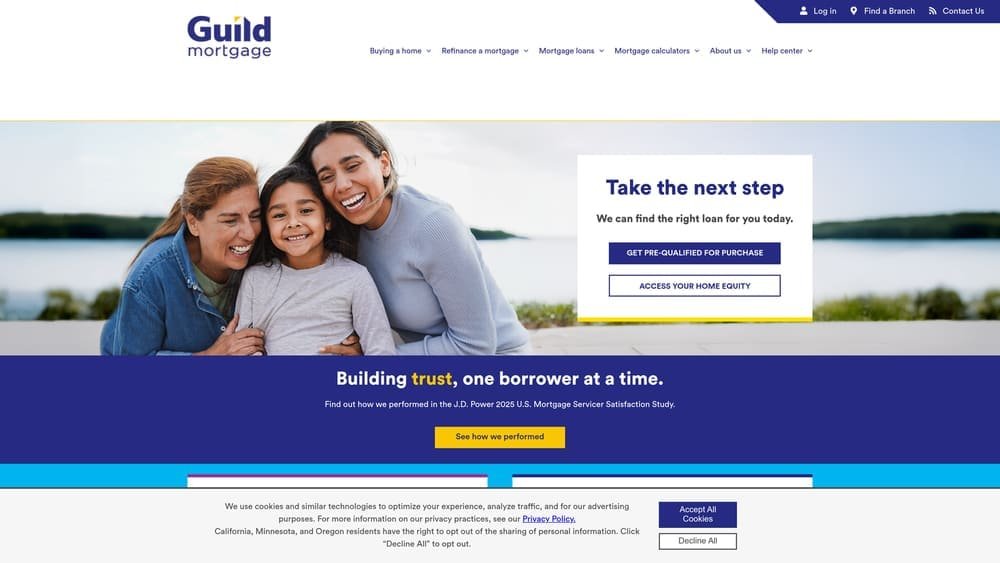
Guild Mortgage is a retail lender with a broad program menu, known particularly for access to down payment assistance programs and specialty products that go beyond standard conventional and FHA offerings.
Where This Tool Shines
Guild’s program breadth is the differentiator here. For buyers who are navigating down payment constraints or need access to state and local assistance programs, a lender with established relationships in that space can open doors that a more streamlined digital lender might not.
The local loan officer network also matters for buyers who prefer a relationship-driven process. Having a dedicated loan officer in your market — rather than a call center — can be valuable when your file has nuances that don’t fit a standard automated underwriting profile.
Key Features
Down Payment Assistance Access: Guild has established relationships with DPA programs and can layer assistance options into the pre-qualification scenario.
Local Loan Officer Network: Officers in many states provide in-person or regionally focused service for buyers who prefer it.
Specialty Product Menu: Products designed for buyers in underserved markets, beyond the standard conventional and government loan lineup.
Long Operating History: An established retail lender with a track record across multiple market cycles.
Best For
First-time buyers or buyers with limited down payment funds who need guidance navigating DPA programs. Also suitable for buyers who want a local loan officer relationship and a broad product menu from a single institution.
Pricing
Varies by loan program and loan officer location. Contact Guild directly for current rate quotes on your specific scenario.
4. Movement Mortgage
Best for: Purchase-focused buyers who want a mission-driven lender with local officer relationships
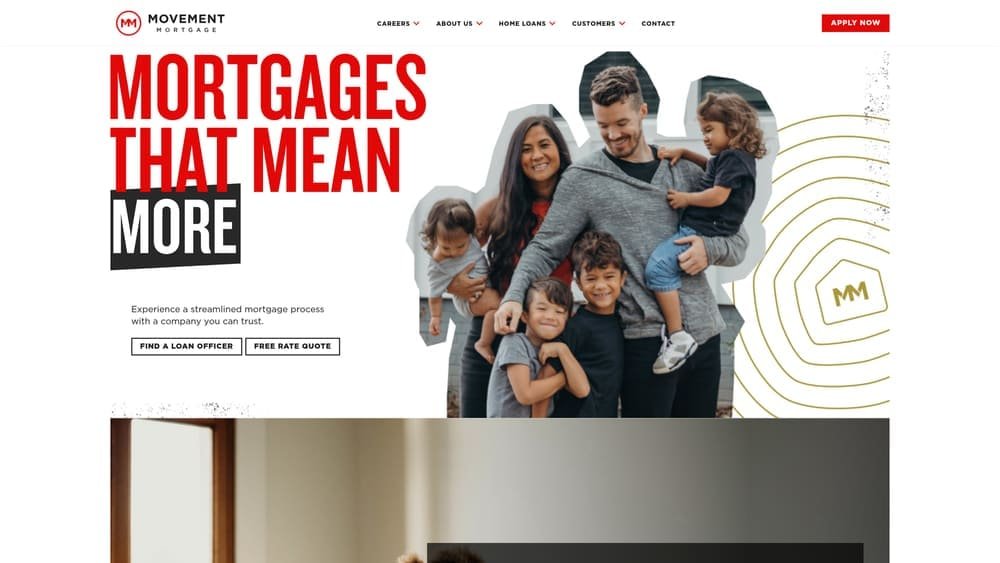
Movement Mortgage is a community-focused retail lender that promotes a rapid loan processing model and operates through a network of local loan officers with a mission-driven business philosophy centered on community reinvestment.
Where This Tool Shines
Movement’s processing speed claim is a genuine differentiator in the retail segment. For buyers in competitive markets where sellers care about closing certainty, a lender that promotes faster-than-average processing timelines can strengthen an offer’s appeal beyond just the price.
The community reinvestment model also attracts buyers who want to work with a lender whose stated mission aligns with neighborhood investment. That’s a qualitative factor, but it resonates with a meaningful segment of purchase buyers.
Key Features
Rapid Processing Model: Movement promotes faster-than-average loan processing timelines — verify current claims on their website, as timelines vary by market and loan type.
Local Loan Officer Network: In-person relationship building is available through officers across many markets.
Community Reinvestment Focus: A mission-driven organizational model that allocates a portion of profits to community development initiatives.
Purchase Transaction Specialization: The platform is oriented toward purchase transactions rather than refinance volume.
Best For
Purchase buyers in competitive markets who want closing speed as a negotiating tool, and who prefer working with a lender that has a defined community mission. Single-shelf pricing applies — rate competition requires shopping elsewhere.
Pricing
Varies by market and loan officer. Contact Movement directly for current rate quotes on your loan scenario.
5. Embrace Home Loans
Best for: Borrowers with varied documentation needs who want attentive service and a broad product menu
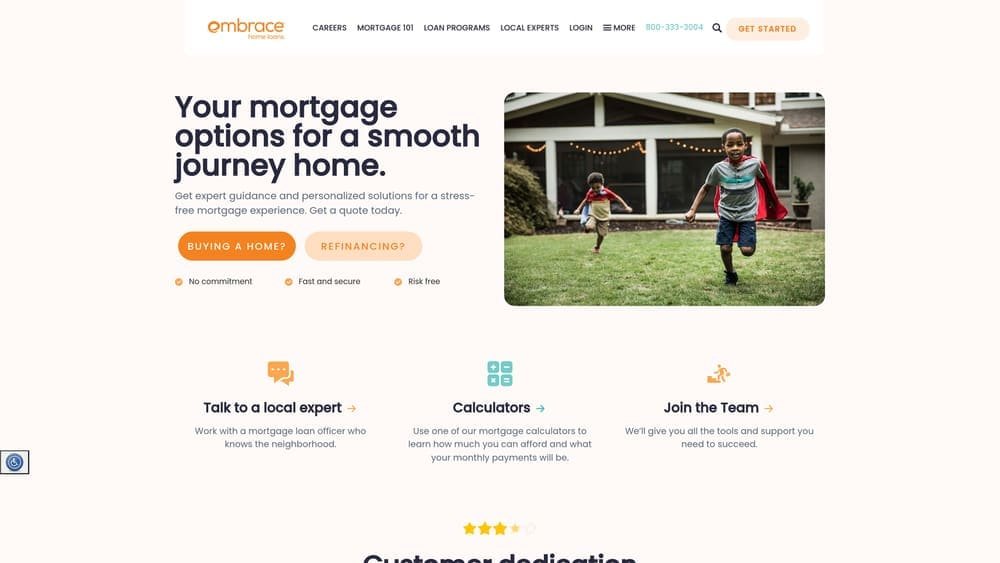
Embrace Home Loans is a mid-size retail lender offering a diverse product menu — conventional, FHA, VA, USDA, and jumbo — with a service model positioned between the automation of large retail lenders and the personalization of a small broker.
Where This Tool Shines
Embrace’s positioning in the mid-size segment means borrowers often get more attentive service than they’d receive from a high-volume retail operation, without sacrificing product variety. For borrowers whose income documentation is non-standard — self-employment, multiple income streams, recent job changes — that attentiveness can translate into a smoother pre-qualification process.
The product breadth across conventional, government, and jumbo categories also means a single lender relationship can cover a range of scenarios without requiring the borrower to start over with a new institution.
Key Features
Diverse Loan Product Menu: Conventional, FHA, VA, USDA, and jumbo loan options available through a single originator.
Personalized Service Model: Mid-size operation means more attentive handling than large retail lenders typically provide.
Multiple Loan Officer Locations: Primarily East Coast presence with additional markets beyond the region.
Documentation Flexibility: Service model accommodates borrowers with varied or complex income documentation needs.
Best For
Borrowers with non-standard income documentation who want a broad product menu and more personalized service than a high-volume retail lender provides. East Coast buyers in particular may find Embrace’s geographic footprint well-matched to their market.
Pricing
Varies by loan type and market. Contact Embrace directly for a current rate quote on your specific scenario.
6. Veterans United Home Loans
Best for: VA-eligible borrowers who want deep VA loan expertise and a structured path to qualification
Veterans United Home Loans is a VA loan specialist and one of the highest-volume VA purchase lenders in the country, offering pre-qualification tailored specifically to VA-eligible borrowers — including a credit counseling program for veterans who don’t yet meet minimum score thresholds.
Where This Tool Shines
Veterans United’s depth in VA financing is the defining characteristic. This is not a generalist lender that happens to offer VA loans — the entire operation is oriented around VA financing, which means the loan officers, underwriters, and support staff understand VA entitlement, funding fees, and occupancy requirements at a level that a generalist retail lender often doesn’t match.
The Lighthouse credit counseling program is particularly meaningful for veterans who are close to qualifying but need guidance on score improvement. Rather than simply declining a borrower who doesn’t meet the threshold, Veterans United offers a structured path toward qualification — a genuinely useful service for veterans navigating credit challenges. For VA loan specifics including eligibility requirements, the VA.gov eligibility page is the authoritative source.
Key Features
Deep VA Loan Expertise: The entire team specializes in VA financing — not a generalist mortgage operation with a VA product on the shelf.
Lighthouse Credit Counseling Program: A structured program for veterans who don’t yet meet minimum score thresholds, providing a path toward qualification rather than a flat decline.
Streamlined VA Pre-Qualification: The pre-qualification process is designed specifically for VA-eligible borrowers, with staff fluent in entitlement and funding fee mechanics.
VA-Specific Educational Resources: Content and guidance specific to VA loan entitlement, funding fee tables, and occupancy requirements.
Best For
Active duty service members, veterans, and surviving spouses who are VA-eligible and want a lender with genuine VA depth. Also well-suited for veterans who need credit counseling support before they can qualify. Not the right fit for non-VA borrowers — the specialization that makes Veterans United strong for VA loans means limited utility outside that product category. Review current VA funding fee tables at VA.gov before pre-qualifying.
Pricing
VA loan pricing varies by lender and scenario. The VA funding fee applies based on down payment percentage and prior VA loan use. Check VA.gov for current funding fee tables before comparing total loan costs.
Side-by-Side: What Each Model Actually Delivers
The table below maps the structural differences across the three origination models represented in this article. These are model-level characteristics, not individual lender claims.
Feature | Shop Mortgage Rates (Broker) | Retail Single-Shelf Lenders | National Aggregators
Lender access: 500+ wholesale lenders | 1 (their own rate shelf) | Lead-gen only — no origination
Credit pull at pre-qual: Soft pull (Vantage Score 4.0) | Varies — often hard pull | Varies
Rate competition: Multiple competing offers | One offer from one shelf | Passes your data to third parties
Cost to borrower: Free | Varies by lender | Free (you are the product)
Origination relationship: Yes — broker originates your loan | Yes — lender originates your loan | No — lead sold to lenders
Licensed states: VA, FL, TN, GA | Varies by lender | N/A
The aggregator column exists here as context, not as a recommendation. If a service’s business model depends on selling your contact information rather than originating your loan, that’s a structural misalignment worth knowing about before you submit your data.
8 Questions Buyers Ask About Mortgage Pre-Qualification
1. Does getting pre-qualified hurt my credit score?
It depends entirely on the type of inquiry the service uses. A soft pull — like the Vantage Score 4.0 pull used by Shop Mortgage Rates — does not affect your credit score. A hard pull typically reduces your score by a small number of points and remains on your report for two years. According to the CFPB, pre-qualification inquiries that use soft pulls do not impact your score. Always confirm which type of inquiry a service uses before submitting your information.
2. What’s the difference between mortgage pre-qualification and pre-approval?
Pre-qualification is typically a soft-pull, self-reported income and asset assessment — it gives you a general borrowing range. Pre-approval involves verified income, assets, and employment, usually with a hard pull, and produces a more credible letter for sellers. Some lenders blur the line between these terms, so ask specifically what verification is included in any letter you receive. The CFPB provides useful context on what these terms mean in practice.
3. How does a soft pull mortgage pre-qualification work?
A soft pull mortgage pre-qualification accesses your credit data for review without triggering a formal inquiry on your credit report. The lender or broker uses the pulled score and credit profile to assess your eligibility and estimated rate range. Because it’s a soft inquiry, it doesn’t affect your FICO or Vantage Score. Shop Mortgage Rates uses Vantage Score 4.0 for this purpose — appropriate for screening at the pre-qualification stage before you formally apply.
4. What is Vantage Score 4.0 and how is it different from FICO?
Vantage Score 4.0 is a credit scoring model developed jointly by the three major credit bureaus. It uses a similar 300-850 scale as FICO but applies different weighting to factors like trended credit data and medical debt. Most mortgage lenders use FICO 8 or FICO 10T at the underwriting stage — not Vantage Score. Vantage Score 4.0 is well-suited for pre-qualification screening precisely because it provides a credit assessment without triggering the hard inquiry that a formal FICO pull would require.
5. Can I get a mortgage pre-approval without a hard pull on my credit?
Yes — a mortgage pre approval without hard pull is available through soft-pull broker platforms like Shop Mortgage Rates. The resulting letter is a pre-qualification based on soft-pull data rather than a fully verified pre-approval. For a fully verified pre-approval with income and asset documentation, most lenders will eventually require a hard pull at the application stage. The soft-pull pre-qual is most valuable during the rate-shopping and comparison phase, before you’ve selected a lender and are ready to formally apply.
6. What does a mortgage pre-qualification letter actually tell a seller?
A pre-qualification letter tells the seller that a lender or broker has reviewed your credit profile and income information and believes you are likely to qualify for a loan up to a specified amount. It is not a loan commitment. Sellers and listing agents generally understand this distinction — a verified pre-approval carries more weight than a basic pre-qual in competitive offer situations. That said, a pre-qual from a recognized institution or a well-documented broker pre-qual can still strengthen your offer in less competitive markets.
7. How do LLPAs affect the rate I’m quoted during pre-qualification?
Loan-Level Price Adjustments (LLPAs) are risk-based pricing adjustments imposed by Fannie Mae and Freddie Mac on conventional loans. They vary based on credit score, LTV ratio, loan purpose, and property type. A borrower at 699 FICO may face a materially higher LLPA than one at 700 FICO — the difference of a single point can shift your effective rate. The Fannie Mae LLPA Matrix is publicly available and worth reviewing before your pre-qualification so you understand how your score affects your pricing tier.
8. Should I get pre-qualified with a broker or go directly to a lender?
The structural answer: a soft pull mortgage broker gives you access to multiple lenders’ pricing simultaneously, while a direct lender gives you one offer from one shelf. If rate competition matters to you — and the math above suggests it should — a broker pre-qualification lets you see what the wholesale market will offer before you commit to a single institution. Going direct to a retail lender makes sense if you have a strong existing relationship, need a specific program that lender specializes in (like Veterans United for VA loans), or prioritize brand recognition in a competitive offer situation.
Matching the Right Service to Your Situation
Here’s a direct breakdown by buyer type, so you can match the right service to your specific situation without reading back through the full list.
You want competing wholesale rates with no credit impact: Shop Mortgage Rates. The NoTouch Credit Pull and 500+ lender network are purpose-built for this scenario. Licensed in VA, FL, TN, and GA.
You want a fast digital letter with strong brand recognition: Rocket Mortgage. The Verified Approval option and polished app experience serve competitive purchase situations well, though you’re working from a single rate shelf.
You need down payment assistance programs: Guild Mortgage. The DPA program access and local loan officer network are genuine differentiators for buyers with limited down payment funds.
You’re VA-eligible and want deep VA expertise: Veterans United. The Lighthouse credit counseling program and VA-specific team make this the strongest retail option for eligible service members and veterans.
You have complex income documentation: Embrace Home Loans. The mid-size service model and broad product menu accommodate non-standard borrower profiles better than high-volume retail automation.
If you’re in Virginia, Florida, Tennessee, or Georgia and want to see what multiple wholesale lenders will offer on your specific scenario — with no impact to your credit — Securely pre-qualify in minutes and compare competing offers before you commit to any single lender’s rate shelf.